 how-to
Why Aerial Roof Reports Are Essential for Accurate Roofing
Table of Contents
- Why Aerial Roof Reports Are Essential for Faster, Safer Estimates
- What Is Included in a Roof Measurement Report
- Drone Roof Inspection Benefits: Safety, Speed, and Better Documentation
- Roof Measurement Accuracy: How Reliable Are the Numbers?
- Roof Report Turnaround Time and What Affects It
- A Step-by-Step Workflow for Ordering, Checking, and Using a Report
- Limitations and Responsible Use of Aerial Imagery
- Aerial Roof Reports vs. Manual Measurement: A Quantified Comparison
- Frequently Asked Questions
Last Updated: October 17, 2026
Why Aerial Roof Reports Are Essential for Faster, Safer Estimates
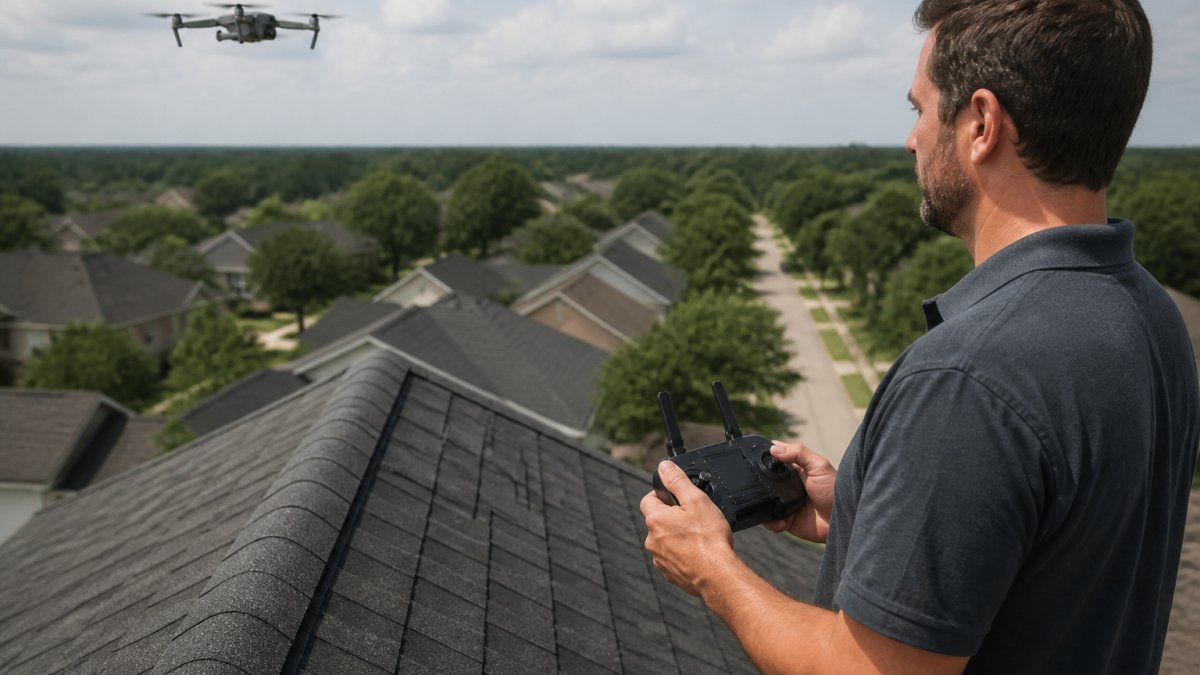
Aerial roof reports are essential because they let a contractor measure and document a roof without sending anyone up a ladder.
Here's the part most guides skip: the report is only as good as the workflow around it.
The case for aerial measurement comes down to three things: nobody climbs, nobody waits, and nothing gets missed.
Speed matters most when a listing goes live or a bid deadline lands.
What an aerial roof report actually is
An aerial roof report is a measurement document built from high-resolution aerial imagery of a property. It lists roof area, pitch, and linear measurements for each edge. It also includes a labeled roof diagram you can hand to an estimator or a claims adjuster.
That single document replaces a site visit for most standard residential roofs. For complex roof geometry, it gives you a strong starting point before anyone sets foot on the property.
What Is Included in a Roof Measurement Report
A roof measurement report includes the numbers an estimator needs to price a job without guessing. Expect a full breakdown of area and edges, plus a diagram that ties every number to a location on the roof.
Standard contents:
- Total roof area in square footage and roofing squares
- Roof pitch and slope for each facet
- Linear measurements for eave, rake, ridge, hip, and valley
- Perimeter length and flashing runs
- A labeled roof diagram with facet callouts
- High-resolution images for visual documentation
The diagram is the piece estimators lean on most. It shows where each measurement sits, so nobody has to reverse-engineer the math.
Drone Roof Inspection Benefits: Safety, Speed, and Better Documentation
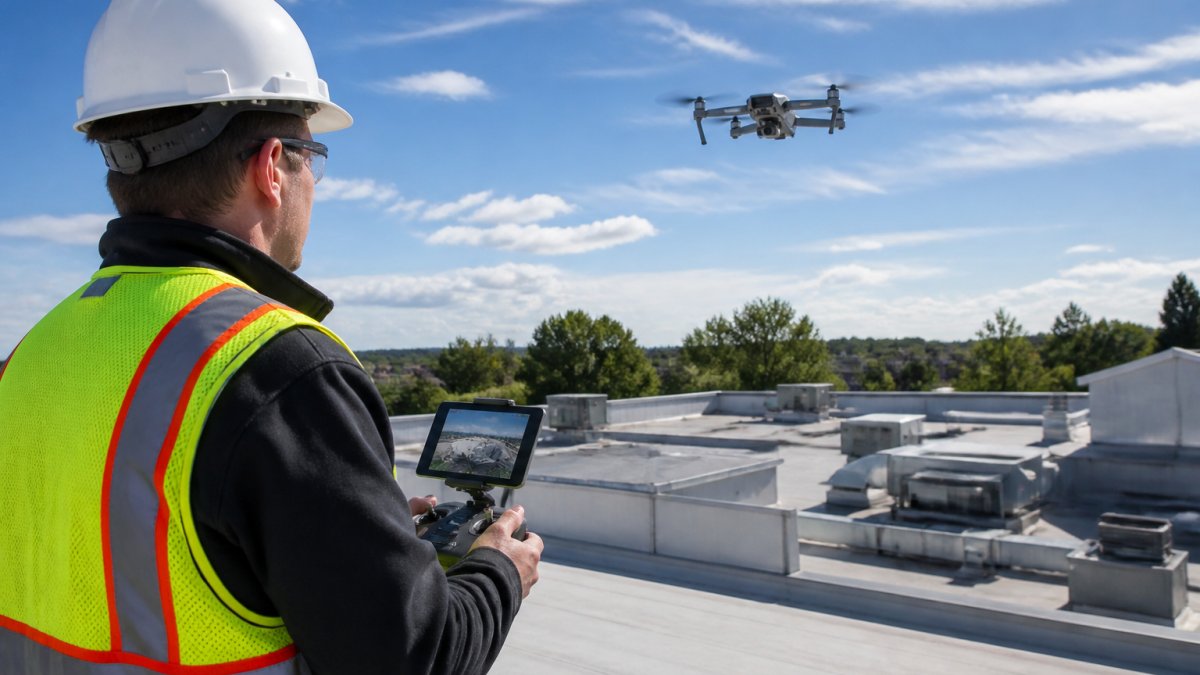
Drone roof inspection benefits start with fall risk, and fall risk is the reason most insurance carriers push remote assessment.
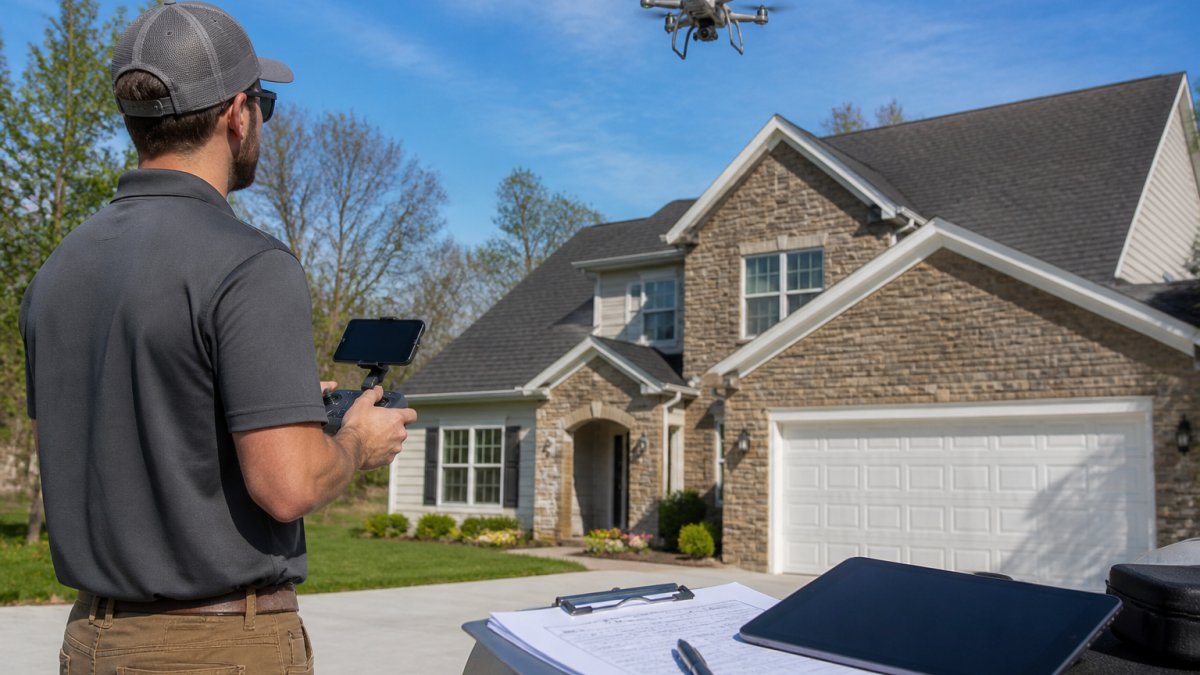
The safety gain is obvious. The documentation gain is subtler and often more valuable. High-resolution images catch lifted shingles, damaged flashing, and granule loss that a quick walk might miss.
Speed follows. A drone flight covers a standard roof in a fraction of the time a manual inspection takes, and the images land in your inbox the same day.
Roof Measurement Accuracy: How Reliable Are the Numbers?
Roof measurement accuracy from aerial reports is high for standard residential roofs, and it drops as geometry gets more complex.
Three mechanisms drive most of the error:
- Image resolution and recency. A sharp, recent capture resolves facet edges cleanly. An older or lower-resolution capture blurs the line between a ridge and a hip, and the area figure drifts with it.
- Occlusion. Tree canopy, shadows, skylights, and HVAC equipment hide edges. When an edge is hidden, the measurement engine interpolates, and interpolation is where discrepancies start.
- Geometry complexity. Flat planes and simple gables measure cleanly. Steep pitches, dormers, multiple valleys, and small facets compound small edge errors into a larger area error.
A practical accuracy check is to compare the report's total roof area against a known quantity. If you have a prior reroof invoice or a material takeoff from a previous job on the same property, the square count on that document is a free baseline.
How to verify measurements and handle discrepancies
Verification is a habit, not a step you skip. Run the same checks on the first job with any new provider, and you will know whether to trust the rest.
What to cross-check:
- Total roof area and squares. Compare against any prior invoice, permit record, or material takeoff you can find for the address.
- Facet count. Count the labeled facets on the diagram against what you can see in the imagery. A missing dormer or a merged valley shows up here first.
- Pitch per facet. Confirm the report lists pitch facet by facet, not as a single blended average. Mixed slopes change both material and waste numbers.
- Linear runs. Spot-check eave, rake, ridge, hip, and valley lengths against the diagram. A ridge that reads short usually means an occluded edge.
- Imagery date. Make sure the capture postdates the last known reroof, addition, or storm event.
When a discrepancy shows up:
- Check the imagery date first. Stale images may predate a reroof or an addition.
- Look for obstructions. Trees, shadows, and skylights can hide an edge and force an interpolation.
- Re-measure the suspect facet by hand on site before you bid. One facet is a cheap check; a wrong whole-roof number is not.
- Ask the provider to re-run the report on newer imagery or to flag low-confidence facets.
A good provider will flag low-confidence facets for you. If a provider cannot tell you which facets are low-confidence, that is itself a signal about the report's reliability.
Roof Report Turnaround Time and What Affects It
Roof report turnaround time depends on image availability, roof complexity, and whether you need a rush report. Standard delivery runs fast when the imagery for the address is already on file. A property with no recent coverage takes longer because the capture has to be scheduled.
What slows a report down:
- No recent imagery for the address
- Heavy tree cover or obstructions
- Complex roof geometry with many facets
- Manual review requests
Ask about same-day delivery before you commit to a deadline. If a listing goes live tomorrow, you need a provider who can hit that window, not one who promises "a few days."
A Step-by-Step Workflow for Ordering, Checking, and Using a Report
The workflow that works is short and repeatable. Run it the same way on every job and the report becomes a routine input, not a project.
- Confirm the address and roof scope. Note any additions, detached structures, or outbuildings you need measured.
- Order the report with the detail level you need. Ask for facet-level pitch and linear measurements, not just total area.
- Check the imagery date. Make sure the capture postdates the last known reroof.
- Review the diagram against the property. Confirm every facet is labeled and nothing is missing.
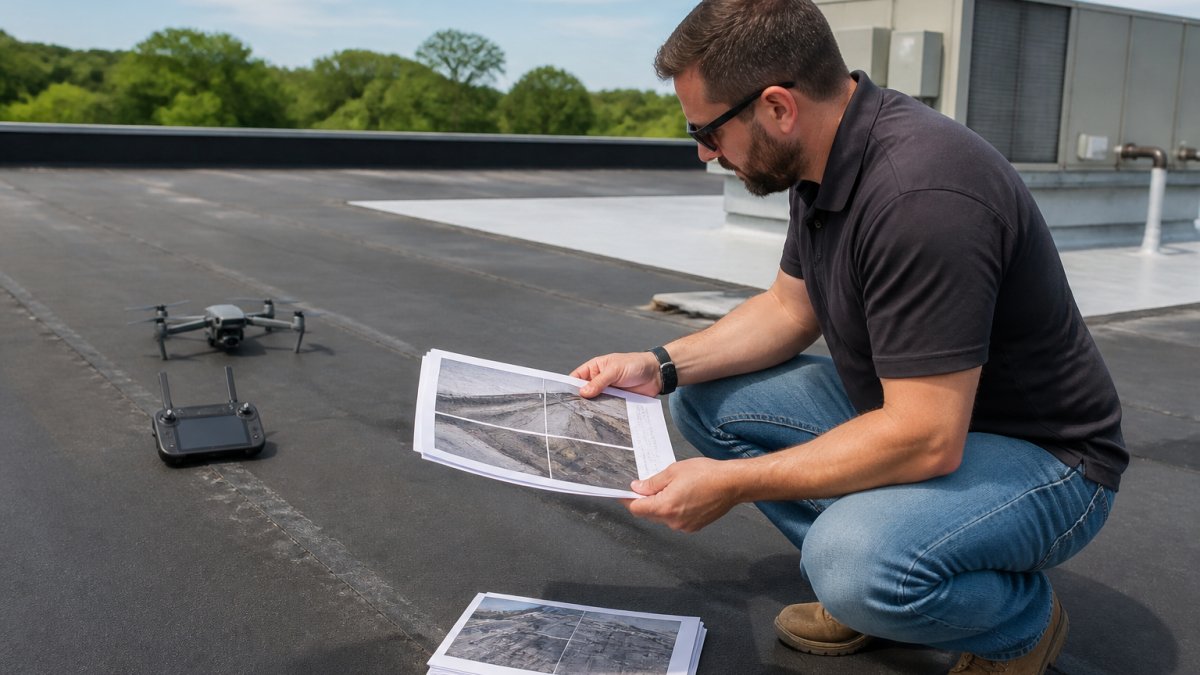
- Spot-check one facet on site. Verify a single plane by hand to build confidence in the rest.
- Import the numbers into your estimate. Apply your waste factor and material pricing.
- Attach the report to the proposal. Clients trust a bid backed by a labeled diagram.
Step five is the one most crews skip. Do it on the first job with a new provider and you'll know whether to trust the rest.
Limitations and Responsible Use of Aerial Imagery
Aerial imagery has real limits, and knowing them keeps you out of trouble. Image age is the biggest one.
Obstruction is the second. Dense tree cover, shadows, and weather haze can hide edges and skew measurements. Complex roof geometry, with many small facets and tight valleys, also strains the imagery.
Responsible use matters too. Aerial imagery is captured under FAA Part 107 rules, and providers should operate within them.
Aerial Roof Reports vs. Manual Measurement: A Quantified Comparison
The comparison comes down to time, safety, and coverage. Aerial reports win on all three for standard roofs. Manual measurement still has a place on complex or damaged roofs where someone needs eyes on the surface.
| Factor | Aerial Roof Report | Manual Measurement |
|---|---|---|
| Crew on the roof | None required | Two-person crew typical |
| Fall risk | Eliminated | Present on every climb |
| Time to first numbers | Same day to a few days | Scheduled site visit, often days out |
| Facet-level detail | Included in diagram | Depends on the measurer |
| Cost driver | Report fee per address | Labor hours plus travel and scheduling |
| Best for | Standard residential roofs | Complex or damaged roofs |
| Weak spot | Image age and obstructions | Safety and scheduling |
How to read the trade-offs:
- Time. An aerial report collapses the measurement step to the time it takes to open a PDF. A manual measurement consumes a scheduled visit, travel, setup, and the climb itself. On a bid deadline, that difference is the whole game.
- Safety exposure. Every manual climb carries fall risk, and fall risk is the reason most insurance carriers push remote assessment. An aerial report removes the climb from the measurement step entirely.
- Cost structure. A report fee is a known, per-address cost. Manual measurement is a labor cost that scales with crew size, travel, and how many jobs you can fit in a day. The cheaper option depends on your volume and how far your crews travel.
- Coverage. Aerial reports give you a labeled diagram and imagery you can attach to a proposal or a claim. Manual measurement gives you eyes on the surface, which matters when the question is condition, not just dimensions.
A decision framework:
- Standard residential roof, bid deadline, no known damage. Order the aerial report. It is the default.
- Complex geometry or many small facets. Order the report as a starting point, then spot-check the suspect facets on site.
- Known or suspected damage. Send someone to the roof, or pair the report with a drone inspection that captures condition, not just dimensions.
- No recent imagery for the address. Confirm turnaround before you commit to a bid date, or plan a manual measurement as the fallback.
The honest read: use aerial reports as your default and manual measurement as the exception. That combination keeps crews safe and bids fast, and it keeps the manual climb reserved for the jobs where eyes on the surface actually change the answer.
Frequently Asked Questions
What is included in an aerial roof report?
A typical aerial roof report includes a roof diagram with labeled facets, pitch and slope readings, total roof area in square footage and roof squares, plus linear measurements for eaves, rakes, ridges, hips, and valleys. Many reports add waste-factor calculations, flashing and penetration callouts, and high-resolution aerial imagery. The exact contents vary by provider, so confirm which measurements and annotations you need before ordering, especially if the report will feed a roofing estimate or an insurance claim.
How accurate are aerial roof measurements?
Aerial roof measurement accuracy is generally within a small percentage of on-site measurement when the imagery is recent and the roof is unobstructed. Accuracy drops when trees overhang the roof, when images are outdated, or when complex roof geometry creates hidden sections. Always check the report date, review the facet diagram against the imagery, and verify any measurement that drives a large material order. If a number looks off, request a re-flight or confirm that section manually.
How long does it take to receive an aerial roof report?
Roof report turnaround time depends on the provider and the level of detail ordered. Many drone providers deliver standard reports within 24 hours, with rush options for same-day delivery when scheduling allows. Factors that extend turnaround include weather, airspace restrictions, and complex roof geometry that needs manual review. If a listing or bid deadline is tight, confirm the delivery window in writing before you order.
Are aerial roof reports a substitute for an on-site roof inspection?
Aerial roof reports document dimensions and surface condition from above, but they do not replace a hands-on inspection when the question is structural, involves attic or decking condition, or requires close examination of flashing details. Use the report to plan the job, order materials, and document condition, then send a qualified roofer on site for anything the imagery cannot resolve. The two work best together, not as replacements.
Roofing bids stall when measurements are slow, and slow measurements put crews on ladders they don't need to climb. Lake County Aerial Solutions delivers FAA Part 107 certified aerial reports with square footage and edge measurements, fully insured operations, and accurate drone data within 24 hours. Our team uses advanced equipment like the DJI Air 3S to capture the detail your estimate needs. Get started with Lake County Aerial Solutions and request a free quote for your next roof report.